Translate

Wednesday, January 24, 2018

Healthy Hearts 101 Field trip

Healthy Hearts 101 
Our token gift


Our field trip was a successful learning experience; switching the original date of Winter Survival with this trip was worth it.

Statements for Puma Thinkers


"When you smoke, tar build up on your lungs."- Jonas B.

"If you eat too much unhealthy food, arteries can become clogged. Then blood cannot flow into the heart." Rakeem S.

"Your lungs will change color when you smoke." Jada W.

"Your lungs will get blisters when you smoke." Haneul P.


 We began with a video presentation of the dangers of smoking and an actual robotic open heart surgery.


Listening to an actual surgeon

AED training
Then we circulated through interactive stations. 

Eating healthy


How interesting!

The circulatory system model (a boar)


Listening to Heart Beats
After jumping, let's listen


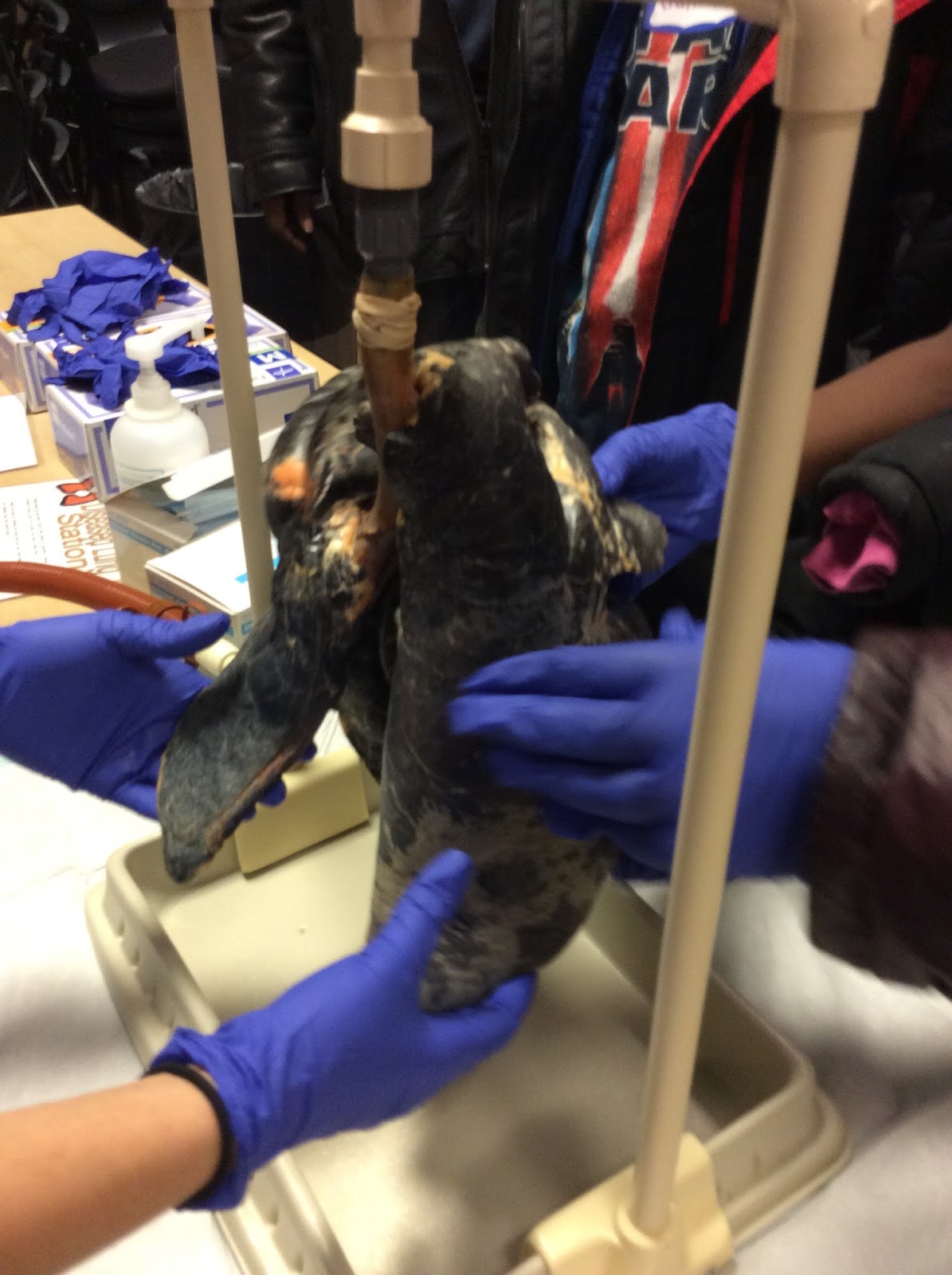
A smoker's lung simulation


Tar and blister on a smoker's lung

A smoker's lung didn't fully inflate

Monday, January 22, 2018

January Updates

January 2018 Updates


Important Dates

Thursday, Jan. 18, 2018: Topic Sheet is due with parent signature.
Friday, Jan. 19, 2018: Final day to change science fair topic.
Monday, Jan. 22, 2018: List of Materials is due.
Wednesday, Jan. 24, 2018: Hypothesis (Experiment) or purpose (Model or Demonstration) is due.
Monday, Jan. 29, 2018: Procedure (Experiment) or Subtopics (Model or Demonstration) is due.
Tuesday, Jan. 28, 2018: Wednesday, Jan. 31, 2018: References and Research are due.
Thursday, Feb. 1, 2018: Unit 3 Test, part 2
Friday, Feb. 2, 2018: A board is given to students who have completed all assignments. (Board Colors are first come, first serve, random selection.)
Wednesday, Feb. 21, 2018: Science Fair Boards are due by 9:00 AM.
                                            Science Fair is 6:00- 7:30 PM.


Forget Me Not Dates 

Tuesday, Jan. 23, 2018: Field Trip, Healthy Hearts 101 Workshop @ St. Joseph Mercy Hospital, Ypsilanti
Tuesday, Jan. 23, 2018: NWEA Reading, Session I, 2:00 PM (Lab A)
Wednesday, Jan. 25, 2018: NWEA Math, Session I, 9:00 AM (Lab A)
Monday, Jan. 29, 2018: NWEA Reading, Session II, 9:00 AM (Lab A)
Wednesday, Jan. 31, 2018: NWEA Math, Session II, 9:00 AM (Lab A)
Wednesday, Jan. 31, 2018: Early release day, Elementary schools 1:31 PM
Friday, Feb. 9, 2018: Talent Show, 7:00 PM
Wednesday, Feb. 14, Valentines day, card exchange, 10:00 AM (Optional)
Friday, Feb. 16, 2018: No School, mid Winter break
Monday, Feb, 19, 2018: No School, Mid Winter break


Subjects at a Glance

Math: Unit 3,  part II: adding unlike denominators with fraction tiles, fraction of a fraction and fraction word stories. Students will review division of fractions.
Language Arts
                 Reading: Students are studying historical fiction as well as mood and tone.
                 Writing: Students will continue our study of how to expand writing with details as we write posthumous letters to Dr. Martin Luther King, Jr. about the progress of equality in America. Students will video tape their comments and post on the blog. Students will begin their study of persuasive writing in early February.
                 Word Study: Students will review parts of speech as well as students will begin studying                                          Greek and Latin roots. Students are learning symbolism.
Social Studies: Students are learning the positive and negative impact of the Columbian Exchange and the Age of Exploration.
Science: Students learned the difference between a scientific method experience and a demonstration experiment: independent variable, dependent variable, and constant. Students will continue our study of matter. We will also study the heart and the cardiovascular system.


Science Fair

Students were given permission to complete either a scientific method, research or demonstration model project. The purpose of the science fair is to learn how to plan long term projects as well as showcase science knowledge. Students will be graded based upon execution of the type of project, effort, neatness, knowledge presented and required parts. Students are not required to attend the science fair; however, attendance is recommended. During the science fair, students will have an opportunity to explain and showcase their projects.


Winter Survival 

Winter Survival was a success. We had one of the warmest days in early January of 2018. Every group was able to gather wood, build the fire and cook their meal. Students learned how to barter for scarce items. There were only a few students who complained of cold feet due to one layer of socks and uninsulated boots. To add to all of our successes, our class made history and earned a perfect clean up score.


Valentine's Day Card Exchange

Students will drink milk or juice and feasting on cookies while reading classmates card exchanges.
Please plan ahead for the card exchange. If a student desires to participate, he or she must bring one for every student in the class. If a student does not bring one for every student, he or she forfeits one's participation. There are no exceptions to this rule. I will send home a list of the first names only of classmates via email.

Thursday, January 11, 2018

Three World Meet Part I

Three Worlds Meet (Advances in European Exploration)


Below is a copy of the classroom presentation.

Monday, January 8, 2018

Winter Survival

Winter Survival 2018


Tuesday, January 9, 2018, our class will embark on an outdoor field trip learning about Early Pioneers Survival Skills and energy. We will travel to a private land in Dexter, Michigan by school bus.  Students self-selected his or her own group members and meal preparation. Students were careful to accommodate allergy restrictions and other dietary restrictions. Each student was assigned to bring specific items for one's group meal. Students will gather all the different sizes of wood in order to build the fire.

The weather will be perfect (not too cold or frigid temperature.) Students are expected to wear the following items:


  • Insulated boots
  • 2 layers of socks
  • 2 layers on one's legs
  • 2-3 layers on one's torsol
  • Outdoor winter jacket
  • Hat or hood
  • insulated/ water-proof gloves
  • infinity scarf is optional
  • Hand/ toe warmers are optional

Any items brought by students must be carried by students. All items brought on the field trip are subject to return soiled, charred,  and/or  reeking in campfire smoke. 


Wednesday, December 6, 2017

December 2017

December 2017


Important Dates
Thursday, Dec. 6, 2017: Hashtag expository paragraph is due. (Final due Date)
Friday, Dec. 8, 2017: Quiz for Social Studies Unit 2, Three worlds Meet part 1/ chapter 3, Native American Regions
Thursday, December 21, 2017: Chapter 3, EDM assessment
Thursday, December 21, 2017: Informational writing piece is due. 


Forget Me Not dates
Thursday, Dec. 7, 2017: Pattengill Book Fair Night 5-8 PM/ Tech Night 6- 7:30 PM
Wednesday, Dec. 20, 2017: Science Parent permission sheet is due. (Keep the remaining sheets)
Friday, Dec. 22, 2017: Tentative Winter Break celebration 2-3
Friday, Dec. 22, 2017: Winter Break begins @3:59 PM
Monday, Dec. 25- Sunday, Jan. 7, 2018: Winter Break Vacation, Enjoy
Monday, Jan. 8, 2018: School resumes


Subjects at a Glance
Math: We are currently studying factions in Unit 3, Fraction Concepts: Addition and Subtraction. Students will be expected to add and subtract with like and unlike denominators as well as order and compare fractions, convert fractions to mixed numbers and vice versa. Students will write a number story with a fractional answer.
English Language Arts
       Writing: Students will write an informational piece on a self selected topic. Students will research clarifying questions to aid in writing an elaborate piece. Also, students will use 3 structures within the pieces in order to tailor the information to the audience. 
        Reading: Students will be able to identify Nonfiction text structures and the author's rationale for selecting the structure. Students will review different text structures and analyze the features and its structure using signal words and the article's summary. Many Guided reading groups are using nonfiction stories. Another good resource for families is msjordansreads Don't forget that I have placed a link at the top of this blog for questions to ask your child while reading.
Our class is listing to an audible copy of Wonder via my Kindle tablet.
        Poetry: Through poetry, students will identify and explain the meaning of similes and metaphors.
Social Studies: We are concluding our study of Native American Environments and Regions. Students reviewed the geography theme of Human Environment/ Interactions: Humans will adapt to an area or an area must modify in order to accommodate its new habitants. We reviewed landforms. Students also compared and contrasted 2 Native American Regions. Our next study will cover how 3 World met and changed the course of History: Europe, Americas and Africa.
Science: Students will cover Matter as well as review what the scientific method for the Science Fair.
  • 5-PS1-1 Develop a model to demonstrate that matter is made of particles too small to be seen.
  • 5-PS1-2 Measure and graph quantities to provide evidence that, regardless of the type of change that occurs, when heating, cooling, or mixing substances, the total weight of matter is conserved.(January 2018)
  • 5-PS1-3 Make observations and measurements to identify materials based on their properties.
  • 5-PS1-4 Conduct an investigation to determine whether the mixing of two or more substances results in new substances. (January 2018)


EDM4, Unit 3 Outcomes, Fraction Concepts: Addition and Subtraction
  • Unit 3: Fraction Concepts, Addition, and Subtraction
  • Use visual models to solve division number stories with fractional answers.
  • Report the remainder to a division problem a fraction.
  • Place a fraction on a number line.
  • Rename fractions and mixed numbers using the same denominators.
  • Estimate answers to fraction addition and subtraction problems.
  • Use visual models to add and subtract fractions and mixed numbers.
  • Solve fraction of fraction problems
Guided Math Groups
This year marks our 5th year doing Guided Math groups with all 4 Teachers including Mrs. Kimmey. We will be teaching Fractions to small groups. Students took a pretest last week which determined one's placement. These groups will enhance comprehension of fractions.

Cold Weather and Brain Breaks

Students will need to bring a hat, gloves and a colder weather coat daily. The temperatures are dropping and soon there will be snow with rigid temperatures. Our class has at least 1 brain break outdoors daily.

Wishlist

Electric pencil sharpener
basketball
Clorox Wipes
hand wipes
Small trinkets for special bin (erasers, stickers, magnets, lip glosses, mechanical pencils, refillable lead, etc.)

Thank you to all the parents who have donated Clorox Wipes and dry erase markers


Friday, December 1, 2017

Science Fair Projects

Science Fair 2017-2018

Important Dates

Wednesday, Dec. 20, 2017: Science Fair Sheet must be signed with a basic idea
Thursday, February 22, 2018: Science Fair Night (Students are not required to attend but it is nice to present your project to our community.)

Science fair is required for all Puma Thinkers; it will be scored using a rubric. PTO donates the boards to all students. Students will receive his or her board upon completing a written draft of all the required parts in January. Each week a draft of the title, investigation question, list of materials, procedural steps, and background research on the topic will be due. A draft shows a student is beginning to plan one's thinking and project. Students should save the draft via in google docs or in a special folder.

Below are the state of Michigan's Science and Engineering Practices for the Science Framework. A science fair project should address and allow students to apply these skills. MI K-12 Standards:

1. Asking questions and defining problems
2. Developing and using models
3. Planning and carrying out investigations
4. Analyzing and interpreting data
5. Using mathematics and computational thinking
6. Constructing explanations and designing solutions
7. Engaging in argument from evidence
8. Obtaining, evaluating, and communicating information

Parents are to sign the first sheet of the packet and to begin to plan the project with your child. There will be no partners this year. Students must learn how to execute the Science Framework independently. The signed copy is due Dec. 20, 2017. Our class will have a topic sheet due upon break reexplaining how to do the project in early January.  The project does not need to be completed until February; however, students must begin thinking about it now. Procrastination is never an option.


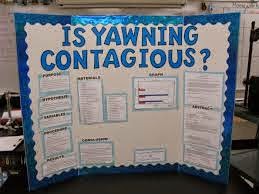
Below are sample projects.
Sample projects
science buddies

Begin with a question

This layout is important.

Required Parts


Coding

Hour of Coding


This week, on  November 28, 2017, our class participated in an hour of coding sponsored by Thomson Reuters. Our Volunteer was Marsha Skoman, a software designer from the University of Michigan. Ironically, she was an alumna of Pattengill Elementary School having had her fifth grade class in our current computer lab. How remarkable!

From a code crash course, students learned basic coding vocabulary culminating into playing Code Combat. Code Combat allowed players to plan their navigation route via simple functions using simple syntax and strings. Here is the link to CodeCombat, CodeCombat Students will have access to level 1 and more levels of the game with advanced skills.

Our class code will be sent via email.

3-5-ETS1-1 Define a simple design problem reflecting a need or a want that includes specified criteria for success and constraints on materials, time, or cost. 3-5-ETS1-2 Generate and compare multiple possible solutions to a problem based on how well each is likely to meet the criteria and constraints of the problem. 3-5-ETS1-3 Plan and carry out fair tests in which variables are controlled and failure points are considered to identify aspects of a model or prototype that can be improved.
We're moving levels.
I'm a future engineer: I make this look easy.
"Does my function have the correct syntax?"
Marsha, computer software designer, and Pattengill Alumna
Girls can code too. 
I need to navigate this level.